

How Sterile Connectors
Impact Modular Systems
How Sterile Connectors
Impact Modular Systems
Overview
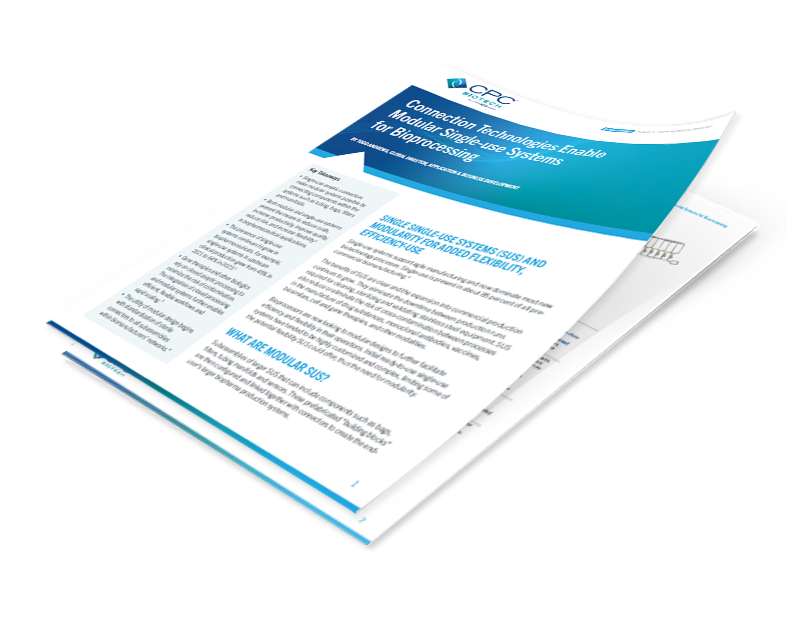
Modular bioprocessing systems offer fast, efficient, flexible manufacturing. System “building blocks” (or, prefabricated single-use subassemblies) link together with sterile connection technologies. Regardless of size or configuration, all modular systems require reliable connectors to facilitate, protect, and manage fluid flow from the beginning of the process to final fill-and-finish.
CPC set the industry standard for modularity connection technologies with its AseptiQuik® Series connectors.
Our expert team shares key information about:
- Modular strategy benefits
- Connector impact on modular systems: Standardization, rapid deployment and scaling flexibility
- What to look for in connection technologies
Typical processes may include dozens, or even hundreds, of connections. CPC’s biopharma fluid management expertise and innovative connector technology helps deliver key factors required for modular strategy success.
Additional Resources

Understanding Modularity and sterile connectors that enable it
In Episode 1, Todd Andrews, Director of Applications & Business Development in CPC Biopharma, invites Jay Harp, VP of Sales & Operations from Int2 Solutions to discuss all things modularity in bioprocess manufacturing.
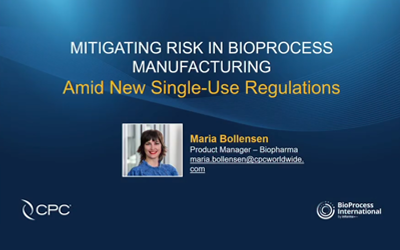
Mitigating Risk in Bioprocess Manufacturing Amid New Single-Use Regulations
Originally presented at BPI 2025, CPC Biotech's Maria Bollensen discusses how to mitigate risk using modular and single-use systems to reduce costs, increase productivity, improve quality, reduce risk, and increase flexibility in biopharmaceutical applications. Also, taking a deeper look at the new regulations supporting single-use technology; including BPOG guidelines, USP <665> and USP <383>.
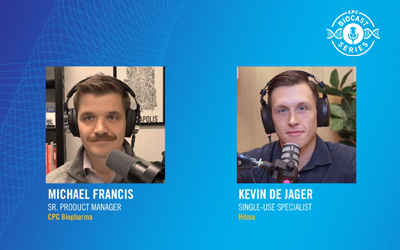
Episode 5: New Regulations – Annex 1 & USP 665
In Episode 5, we have a guest host: Michael Francis sits down with Kevin de Jager of HITMA and discusses upcoming regulations shaping process manufacturing – specifically, Annex I and USP665.
Want More Information?


 Toll-Free:
 © 2026 CPC Biotech. ALL RIGHTS RESERVED.

© 2026 CPC Biotech. ALL RIGHTS RESERVED.